

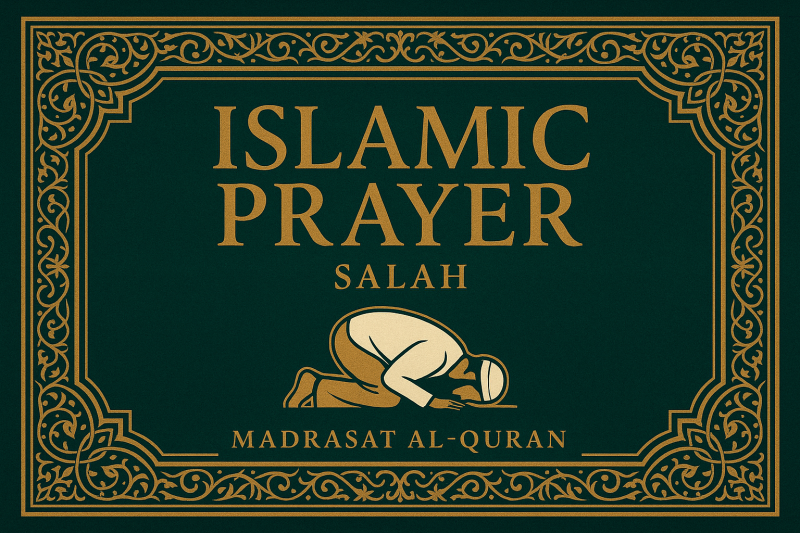
Islamic Prayer (Ṣalāh): Connecting with Allah Five Times Daily
Ṣalāh (Prayer) is the ritual worship performed by Muslims five times a day and is the second Pillar of Islam. From the dawn Fajr prayer to the night Isha’, Muslims face the Ka’bah in Mecca and recite Qur’anic verses and supplications while standing, bowing, and prostrating. These five daily prayers (Fajr, Zuhr, ‘Asr, Maghrib, ‘Isha) structure a believer’s day around worship and remembrance of Allah. Prayer is described in the Qur’an as a shield against immoral behavior: “Verily, prayer restrains one from shameful and unjust deeds” (Quran 29:45). It is a constant reminder of God’s presence, as Muslims pause their worldly activities to stand before Allah.
Five Daily Prayers: Rituals and Times
Each prayer has a prescribed number of units (rak‘ahs) and specific postures. For example, Fajr has two rak‘ahs at dawn, while Dhuhr and ‘Asr are four rak‘ahs each midday and afternoon, and Maghrib has three at sunset before Isha’s four at night. The adhan (call to prayer) is broadcast from mosques to announce each prayer time. Performing prayers on time is considered an act of devotion and discipline. Congregational prayer (jama‘ah) at the mosque — especially for men — is highly emphasized in Islam, fostering community unity. For children, learning the prayer movements and words is a key part of early Islamic education, often taught alongside Qur’an memorization.
Spiritual Benefits of Prayer
Ṣalāh serves as a direct communication with Allah, free of any intermediaries. It builds humility and piety: the Qur’an says, “Successful indeed are the believers, who are humble in their prayers” (Quran 23:1-2). The Prophet ﷺ taught that one’s first deed on Judgment Day will be prayer; if it is sound, the rest of one’s deeds will be sound. By repeatedly uttering phrases like “Allahu Akbar” (God is Greatest) and bowing in worship, a Muslim constantly reinforces submission to Allah. Regular prayer also creates mindfulness (taqwa): having structured pauses to recite the Qur’an (Surah Al-Fatihah in each unit) and supplicate Allah brings inner peace, removes stress, and purifies the heart. Scholars note that prayer strengthens faith and makes Muslims grateful and God-conscious in daily life.
Key Takeaways: - Ṣalāh is the Muslims’ link to Allah, observed five times daily as an obligation and spiritual nourishment.
Prayer provides discipline and a reminder of God throughout the day, helping one avoid wrongdoing.
Each prayer emphasizes equality before God; all stand shoulder-to-shoulder regardless of status.
Teaching children to pray five times a day instills Islamic values and a lifelong habit of worship.