
Eid al-Adha: Its Meaning Story and Spiritual and Social Significance
What is Eid al-Adha and Its Origin in Islam
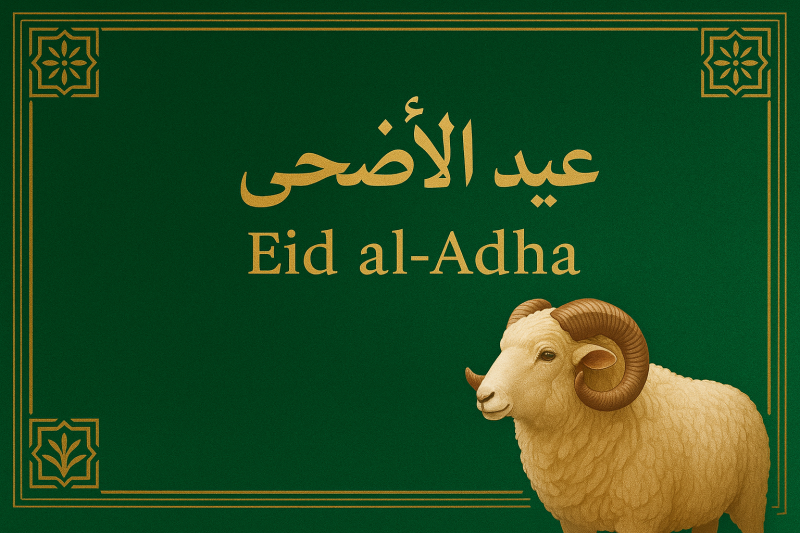
Eid al-Adha, or the "Festival of Sacrifice," is one of the two major annual Islamic festivals (along with Eid al-Fitr). It is celebrated by Muslims worldwide on the 10th day of Dhul-Hijjah, the last month of the Islamic lunar calendar. This joyous occasion follows the Day of Arafah (9th Dhul-Hijjah), when pilgrims performing Hajj gather on the plains of Arafat, marking the pinnacle of the Hajj rituals. Eid al-Adha lasts for four days: the day of Eid itself and the following three Days of Tashreeq.
The name Eid al-Adha is derived from the ritual of sacrificing an animal (typically a sheep, cow, or camel) to commemorate the obedience and devotion of Prophet Ibrahim (Abraham) when he was willing to sacrifice his son Ismail (Ishmael) in submission to God's command. Allah replaced Ismail with a ram, thus sparing him. Ever since, Muslims perform the act of sacrifice annually, echoing this profound story of faith and obedience.
The Prophet Muhammad ﷺ established this Eid for Muslims, saying:
"Allah has replaced for you two better days: the Day of Fitr and the Day of Sacrifice (Eid al-Adha)." (Abu Dawood and An-Nasa’i).
Thus, Eid al-Adha is both an act of worship and a celebration of gratitude to Allah Almighty, observed by Muslims with prayer, charity, family gatherings, and sacrifice.
The Story of Prophet Ibrahim's Obedience
The heart of Eid al-Adha lies in the inspiring story of Prophet Ibrahim (peace be upon him) and his son Ismail (peace be upon him).
Allah tested Prophet Ibrahim through a vision in which he was commanded to sacrifice his beloved son. When Ibrahim shared this vision with Ismail, the son responded with remarkable faith:
"O my father, do as you are commanded. You will find me, if Allah wills, among the steadfast." (Quran, As-Saffat 37:102).
Both father and son submitted willingly to Allah's command, exemplifying perfect obedience and trust. As Ibrahim was about to carry out the sacrifice, Allah intervened, sparing Ismail and providing a ram instead:
"And We ransomed him with a great sacrifice." (Quran, As-Saffat 37:107).
This story immortalizes the virtues of faith, submission, and sacrifice in the path of Allah, values that Eid al-Adha continues to teach to Muslims around the world.
The Ritual of Sacrifice and Its Meanings
The sacrifice (udhiyah) performed during Eid al-Adha is a Sunnah of the Prophet ﷺ, commemorating the great act of obedience of Prophet Ibrahim. The sacrifice takes place after the Eid prayer and continues until sunset on the third day of Tashreeq.
Muslims who are financially able select an appropriate animal (sheep, cow, or camel), ensuring it meets the prescribed conditions (healthy and free of defects), and slaughter it while mentioning Allah’s name and saying Takbeer (Allahu Akbar). The meat is divided into three parts: one third for the family, one third for relatives and friends, and one third for the poor and needy.
This practice is not merely about the physical act of sacrifice. It is an expression of gratitude to Allah for His countless blessings and a means of fostering social solidarity. The Quran beautifully highlights this point:
"It is neither their meat nor their blood that reaches Allah, but it is piety from you that reaches Him." (Quran, Al-Hajj 22:37).
Through sacrifice, Muslims learn the values of generosity, humility, and selflessness. It also serves to alleviate hunger and bring joy to the less fortunate during this festive season. As the Prophet ﷺ said:
"There is no deed that the son of Adam does on the Day of Sacrifice that is dearer to Allah than the shedding of blood (sacrifice)." (Tirmidhi).
Moreover, the modern world allows Muslims to extend the spirit of sacrifice through acts of charity beyond their local communities. The availability of Quran memorization online, Tajweed online classes, and Quran reading programs enables Muslims to enrich their spiritual connection with Allah from any location, fostering a deeper understanding of Quran recitation and promoting the study of the Arabic language — the language of the Holy Quran.
The Spiritual and Social Impact of Eid
Spiritually, Eid al-Adha serves as a culmination of devotion and worship during the first ten days of Dhul-Hijjah, inspiring Muslims to renew their relationship with Allah. The communal Eid prayer, resounding Takbeer (declarations of Allah’s greatness), and acts of charity unite Muslims in a collective expression of faith and gratitude.
The lessons from the story of Ibrahim remind believers of the importance of obedience, trust, and submission to the will of Allah, urging them to incorporate these values into their daily lives.
Socially, Eid al-Adha reinforces the bonds of community and compassion. Sharing the meat of the sacrifice ensures that even the most vulnerable members of society can partake in the joy of Eid. Visiting family and friends, reconciling differences, and extending acts of kindness promote harmony and unity within the Muslim Ummah.
In today’s interconnected world, Muslims also turn to digital platforms to strengthen these connections through learning and spiritual growth. Online resources such as Quran memorization online, Tajweed online classes, and Quran reading programs have made it easier than ever to study the Arabic language and the Quran’s meanings, enabling believers to enhance their understanding and practice of Islam during this sacred period.
The Virtue of the First Ten Days of Dhul-Hijjah
The first ten days of Dhul-Hijjah are among the most virtuous days in Islam. Allah swears by these days in the Quran:
"By the dawn; and by the ten nights." (Quran, Al-Fajr 89:1-2).
The Prophet ﷺ said:
"There are no days in which righteous deeds are more beloved to Allah than these ten days." (Bukhari).
Muslims are encouraged to increase their acts of worship during this period, including prayer, fasting (especially on the Day of Arafah), Quran recitation, charity, and remembrance of Allah.
The Day of Arafah (9th Dhul-Hijjah) holds particular significance. The Prophet ﷺ said about fasting on this day:
"It expiates the sins of the previous year and the coming year." (Muslim).
Believers strive to draw closer to Allah through acts of worship and reflection. Many enhance their Quran reading and enroll in Quran memorization online programs or Tajweed online classes to improve their recitation and understanding. The ability to access Arabic language resources online further empowers Muslims to connect with the Quran in its original language, enriching their spiritual experience during these blessed days.
Conclusion and Prayer
Eid al-Adha is not merely a celebration; it is a profound reminder of the virtues of faith, obedience, sacrifice, and compassion. The festival calls Muslims to embody these values in their lives and to extend acts of kindness to others.
As we commemorate this sacred occasion, let us reflect on the lessons of Prophet Ibrahim and strive to renew our devotion to Allah. Let us embrace the opportunities for spiritual growth through Quran memorization online, Tajweed online classes, and Quran reading programs, deepening our understanding of the Arabic language and the timeless wisdom of the Quran.
O Allah, accept our good deeds and sacrifices, forgive our sins, and bless us with steadfast faith. Unite the hearts of the Muslim Ummah and grant peace and prosperity to all. Ameen.
Eid Mubarak to you and your loved ones — may this Eid bring you joy, peace, and countless blessings.