

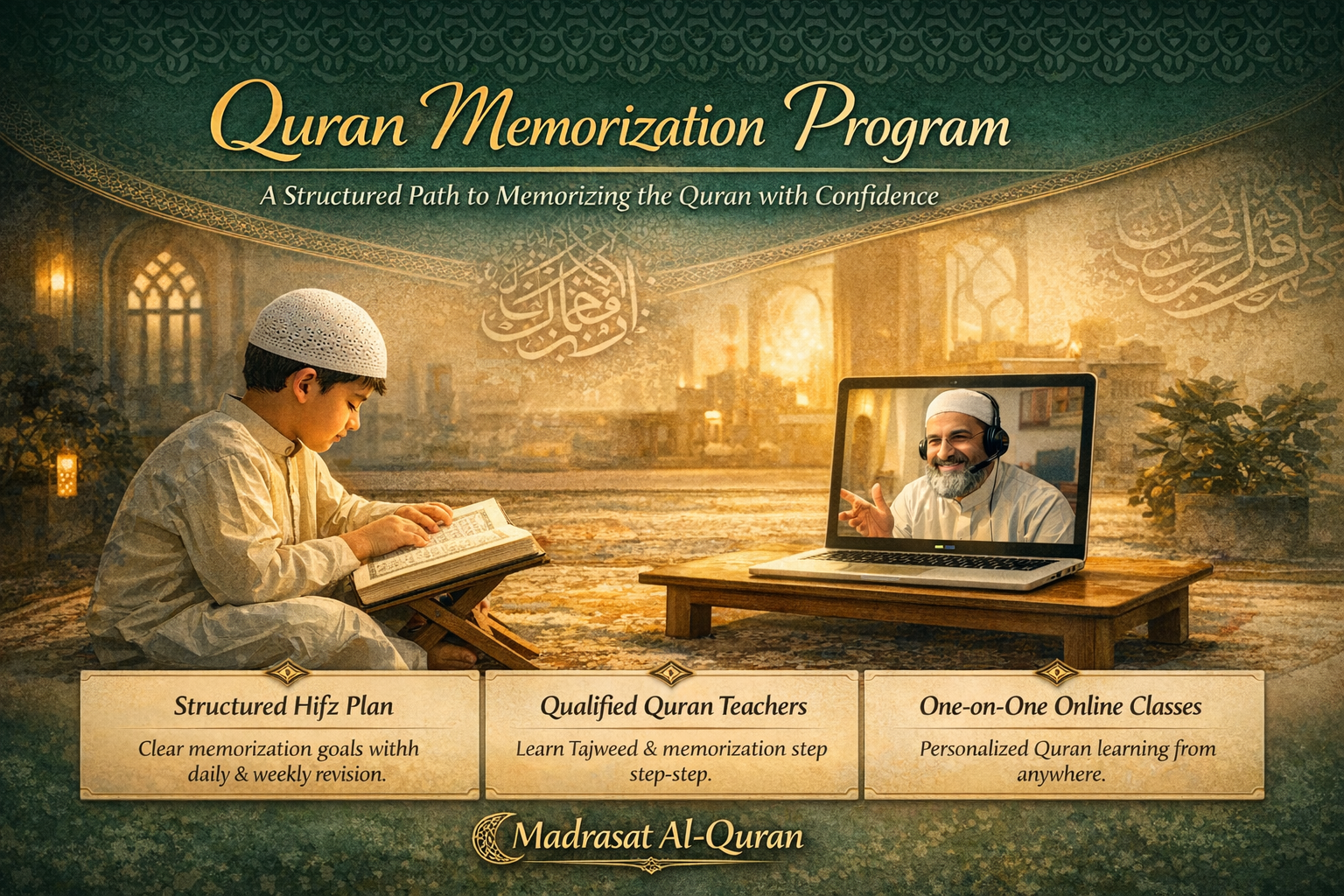
Quran Memorization Program: A Practical Guide for Children, Adults, and New Muslims
For many Muslims, memorizing the Quran is a lifelong dream. It is not only an act of worship but also a journey that strengthens faith, discipline, and connection with Allah. Yet despite the strong desire to memorize the Quran, many people struggle to find the right path to begin.
Parents often want their children to grow up connected to the Quran but cannot find qualified teachers or structured learning opportunities in their local communities. Adults may feel embarrassed because they never learned how to read the Quran properly. New Muslims may want to build a strong foundation but don’t know where to start.
The truth is that memorizing the Quran does not require extraordinary talent. What it truly requires is a clear system, consistent guidance, and a supportive environment.
A well-designed Quran memorization program can make this journey easier and more achievable. With structured lessons, experienced teachers, and consistent revision, students can steadily progress—whether they are children beginning their journey, adults improving their recitation, or new Muslims learning the basics.
In this guide, we will explore the common challenges people face when trying to memorize the Quran and how a structured program can help overcome them.
Why Memorizing the Quran Matters
Memorizing the Quran is one of the most honored acts in Islam. The Prophet ﷺ emphasized the special status of those who dedicate themselves to learning and memorizing the Quran.
But beyond the reward, memorization brings many benefits:
-
It strengthens a Muslim’s connection with Allah
-
It improves daily prayer and concentration
-
It deepens understanding of Islamic teachings
-
It builds discipline and mental focus
-
It preserves the Quran in the heart
For children especially, early exposure to Quran memorization builds a lifelong relationship with the Book of Allah.
However, the challenge is not the desire to memorize—it is finding the right way to do it.
The Most Common Challenges in Quran Memorization
Many people start memorizing the Quran with enthusiasm but struggle to continue. In most cases, the problem is not motivation but structure.
Here are the most common challenges.
Lack of Qualified Teachers
Many Muslim families live in areas where access to skilled Quran teachers is limited.
Parents want their children to learn:
-
Correct pronunciation
-
Proper Tajweed rules
-
Accurate memorization techniques
But without experienced teachers, students may develop mistakes that become difficult to correct later.
Difficulty Reading the Quran
A large number of Muslims never had the chance to properly learn the Arabic alphabet or Quran reading basics.
This is especially common among:
-
Adult learners
-
Muslims living in non-Arabic countries
-
New Muslims who are starting from zero
Without the ability to read fluently, memorization becomes extremely difficult.
No Structured Memorization Plan
Many students try to memorize randomly—one surah today, another tomorrow.
Without a clear system, problems quickly appear:
-
Memorization becomes inconsistent
-
Revision is neglected
-
Previously memorized verses are forgotten
A structured system is essential for long-term success.
What Makes a Good Quran Memorization Program?
A successful Quran memorization program is not just about memorizing verses. It is about building a complete learning system.
Here are the key elements that make a program effective.
Step-by-Step Learning Structure
Students should progress through clear stages:
-
Learning the Arabic alphabet
-
Mastering pronunciation
-
Understanding Tajweed rules
-
Beginning guided memorization
-
Following a consistent revision system
Each stage builds the foundation for the next.
Consistent Teacher Guidance
A teacher does more than listen to memorization.
They help students:
-
Correct pronunciation mistakes
-
Apply Tajweed rules properly
-
Maintain memorization discipline
-
Stay motivated throughout the journey
Regular guidance dramatically increases success rates.
A Strong Revision System
Revision is the secret behind successful Quran memorization.
Without revision, memorization fades quickly.
Effective programs include:
-
Daily revision
-
Weekly review sessions
-
Long-term memorization checks
This ensures that what is memorized stays strong over time.
Who Can Benefit from a Quran Memorization Program?
One of the biggest misconceptions is that Quran memorization is only for children.
In reality, people of all ages can benefit from a structured program.
Parents Enrolling Their Children
Children absorb information quickly and develop strong memorization habits early.
A good program helps children:
-
Learn Tajweed correctly from the start
-
Develop discipline and focus
-
Build a lifelong connection with the Quran
Parents often find that structured learning helps children stay motivated and consistent.
Adult Learners Improving Their Recitation
Many adults want to reconnect with the Quran later in life.
Some may already read the Quran but want to improve their Tajweed. Others may be starting from the beginning.
A supportive learning environment makes it possible to progress confidently, regardless of age.
New Muslims Learning Islamic Foundations
For new Muslims, learning the Quran is a beautiful but sometimes overwhelming experience.
They often need guidance with:
-
Arabic pronunciation
-
Quran reading basics
-
Understanding short surahs used in prayer
A structured program provides the foundation needed to build confidence step by step.
How Online Quran Learning Is Changing Access to Education
Technology has opened new doors for Quran education.
Online learning has made it possible for students anywhere in the world to access qualified teachers and structured programs.
Benefits of online Quran learning include:
-
Flexible scheduling
-
Access to experienced teachers
-
One-on-one personalized lessons
-
Learning from home
-
Consistent progress tracking
For families and individuals with busy schedules, this flexibility makes Quran memorization much more achievable.
A Structured Approach to Quran Memorization
Programs like the Quran memorization program offered by Madrasat Al-Quran focus on creating a balanced learning experience that combines memorization, understanding, and revision.
Students typically receive:
-
One-on-one online Quran classes
-
Guidance from qualified Quran teachers
-
A clear memorization plan tailored to their level
-
Regular revision sessions to strengthen memorization
For beginners, the journey often starts with learning the Arabic alphabet and correct pronunciation. As students gain confidence, they gradually move into memorizing short surahs and building long-term memorization habits.
This step-by-step approach helps students progress without feeling overwhelmed.
Practical Tips for Successful Quran Memorization
Regardless of the program you choose, certain habits make memorization easier.
Set Realistic Goals
Trying to memorize too much too quickly can lead to frustration.
Start small. Even memorizing a few verses daily can lead to significant progress over time.
Be Consistent
Consistency is more important than speed.
Memorizing a small portion every day is far more effective than memorizing large sections occasionally.
Review Frequently
Always revise previously memorized verses.
A simple system is:
-
New memorization daily
-
Revision of the last few days
-
Weekly review of older sections
Create a Quran Routine
Link Quran memorization to a specific time each day.
Many students find these times helpful:
-
After Fajr prayer
-
Before bedtime
-
During quiet evening hours
Routine helps turn memorization into a natural part of daily life.
Conclusion
Memorizing the Quran is a deeply rewarding journey that brings spiritual growth, discipline, and a stronger connection with Allah. However, many people struggle not because they lack motivation, but because they lack structure, guidance, or access to qualified teachers.
A well-organized Quran memorization program can provide the support needed to overcome these challenges. With step-by-step learning, consistent teacher guidance, and strong revision systems, students of all ages can make steady progress in memorizing the Quran.
Whether you are a parent hoping to guide your child, an adult reconnecting with the Quran, or a new Muslim beginning your journey, the right learning environment can make all the difference.
Exploring structured Quran learning opportunities may be the first step toward turning the dream of Quran memorization into a lasting reality.