

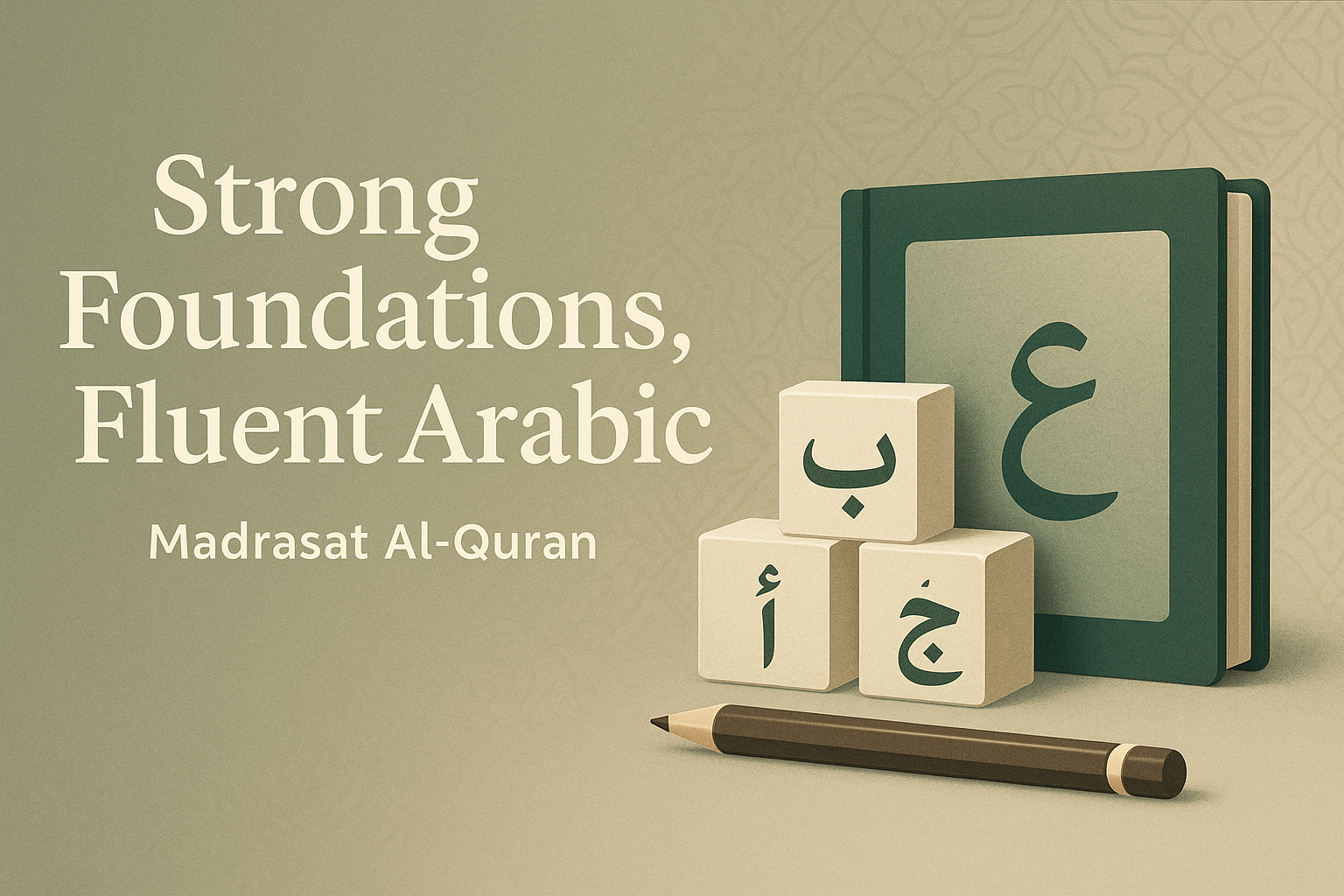
Mastering the Arabic Language to Build a Strong Foundation
Mastering the Arabic Language and Building a Strong Foundation: Your Path to Deep Understanding and Excellence
Mastering the Arabic language is not merely an educational goal — it is a complete journey towards comprehension, awareness, and influence. Language is not just a communication tool; it is the vessel of thought, the means of expression, and the bridge that connects a person to their heritage, religion, and identity. Anyone who seeks to understand the Qur’an and Sunnah deeply, to become an influential teacher or a successful da’wah speaker, or to pursue research in Islamic and human sciences must start here: by building a strong foundation in Arabic and progressing steadily towards mastery.
The Importance of a Strong Foundation in Arabic
Language is like a building — it cannot rise or remain stable without a solid base. Building a strong foundation in Arabic is the first and most essential step for anyone seeking mastery. True understanding of sentences and structures, the ability to read and grasp precise meanings, and fluency in speaking and writing are all direct results of a solid linguistic base.
Without this foundation, a learner will struggle to progress and will quickly feel discouraged. But those who start from the roots will find themselves improving steadily and reaching high levels of eloquence and proficiency.
The Benefits and Advantages of Mastering Arabic
1. A deeper understanding of Islamic texts
Mastery of Arabic opens the door to understanding the Qur’an and Sunnah without complete dependence on commentaries or translations. You will taste the beauty of the verses, perceive the subtleties of rhetoric, and grasp precise meanings by yourself — deepening your faith and strengthening your connection with God.
2. Access to knowledge and heritage
Arabic is the key to reading original works in fiqh, hadith, tafsir, and classical literature. Mastery allows you to dive into the treasures of Islamic thought and intellectual heritage directly from primary sources without intermediaries.
3. Clear expression and strong influence
A person who masters Arabic can express ideas clearly and powerfully, and influence others in an articulate and convincing way — whether in teaching, da’wah, or conversation.
4. Enhanced thinking and writing skills
Language is not just vocabulary — it is a way of thinking. The more skilled you become, the more capable you are of structuring arguments, organizing thoughts, and writing logically and coherently.
5. Strengthening identity and belonging
Arabic is more than a language — it is identity, history, and culture. Mastering it reinforces your sense of belonging to your Ummah, gives you pride in your heritage, and connects you with your roots.
Gradual Learning and Consistency: The Secret to Mastery
Language cannot be mastered overnight, nor does it require extraordinary talent. What it truly needs is a clear path and small, consistent steps. The greatest secret to success in this journey is combining gradual learning with consistency.
Gradual learning: Start with the basics — the alphabet and pronunciation — then move to fundamental grammar and sentence structure. After that, build vocabulary and phrases, then develop reading and comprehension skills, and finally move toward writing and speaking fluently. Each stage builds on the previous one, and rushing only leads to frustration.
Consistency: Continuity is more important than intensity. A little bit of daily learning produces far better results over time than intense study followed by long breaks. Make Arabic a daily habit — speak it, write in it, read it — and you’ll see it grow naturally within you.
Practical application: Theory alone is not enough. Everything you learn must be applied — in conversation, writing, reading, or interpretation. Practice transforms knowledge into real skill.
Reflective Questions to Help You Improve Your Arabic
1. Which skill do you need to improve the most: pronunciation, grammar, vocabulary, or comprehension?
2. How can you incorporate Arabic into your daily routine in a simple, consistent way?
3. Which texts or books can you start reading now to expand your vocabulary?
4. Are you following a clear, gradual plan for learning Arabic, or are you jumping randomly between skills?
5. What difficulties do you face in learning Arabic, and how can you overcome them through gradual practice?
Conclusion
Mastering Arabic is a journey of building the self before it is an academic objective. It is a path to a deeper understanding of your religion, culture, and identity — and a way to acquire tools for thinking, expressing, and influencing. Anyone who embarks on this journey with steady steps, wise progression, and consistent effort will find Arabic becoming a part of them, granting them strength in understanding, beauty in expression, and excellence in all areas of life.
Madrasat Al-Quran Academy Invitation
At Madrasat Al-Quran Academy, we believe Arabic is more than a subject — it is a mission and a way of life. That’s why we have designed our educational programs with a structured, step-by-step approach that begins with the fundamentals and leads you to the highest levels of mastery. Our interactive lessons, practical exercises, and continuous support ensure that you progress with confidence and success.
If you want to build a strong linguistic foundation, achieve real fluency and eloquence, and understand the Qur’an and Sunnah deeply, your journey begins here. Join us and start your path to Arabic excellence with a team of expert teachers and scholars.