

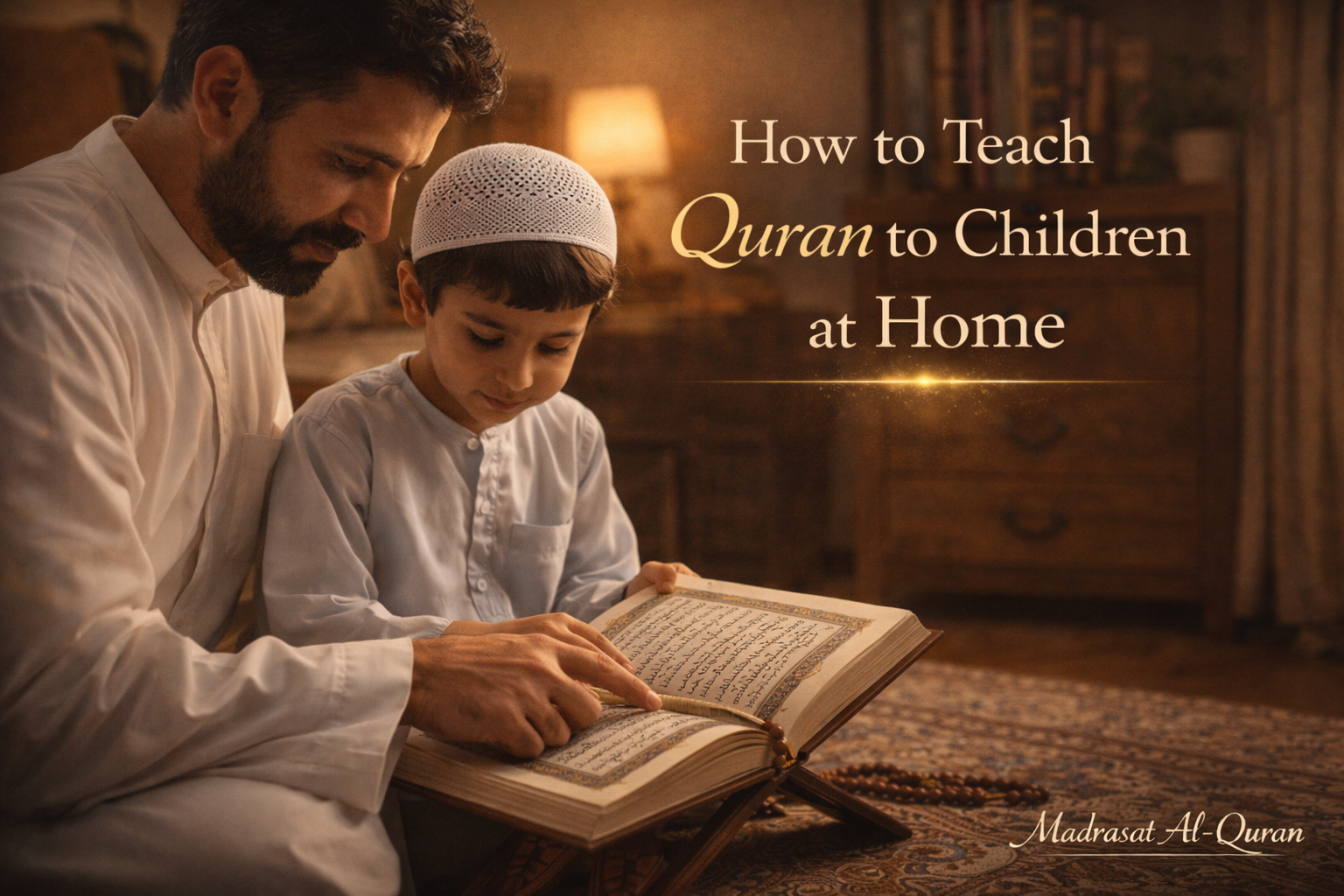
How to Teach Quran to Children at Home
Teaching the Quran at home is one of the most meaningful responsibilities a parent can undertake. Beyond literacy, Quran education shapes identity, strengthens faith, and builds moral character from an early age.
However, many parents struggle with practical questions:
Where should we start?
How much should a child memorize daily?
How do we keep children motivated?
What if parents are not fluent in Arabic?
Effective Quran education at home requires structure, patience, and the right methodology.
1. Start with Love Before Memorization
Children connect emotionally before they connect academically.
Before focusing on memorization:
Let them hear beautiful recitation daily.
Share simple stories from the Quran.
Create a positive emotional environment around Quran time.
When the Quran is associated with warmth and encouragement — not pressure — children develop intrinsic motivation.
2. Build Strong Foundations First
Jumping directly into memorization without preparation often leads to frustration.
A structured foundation includes:
Learning the Arabic letters correctly
Mastering proper pronunciation (Makharij)
Basic Tajweed awareness
Listening and repetition exercises
Correct pronunciation at an early stage prevents long-term mistakes.
3. Keep Sessions Short and Consistent
Children learn best in focused, manageable sessions.
Recommended approach:
15–25 minutes daily depending on age
Clear, small memorization targets
Regular review of previous lessons
Gentle correction without harsh criticism
Consistency matters more than intensity.
4. Use Positive Reinforcement
Motivation is critical in childhood learning.
Parents can:
Celebrate small achievements
Create reward charts
Encourage effort, not just results
Avoid comparisons with siblings or peers
A confident child memorizes better than a pressured one.
5. Incorporate Understanding Alongside Memorization
Memorization alone is beneficial, but understanding enhances retention and connection.
Simple steps include:
Explaining short verses in child-friendly language
Linking verses to daily behavior
Asking reflective questions
This builds not only memory — but character.
6. When Parents Need Support
Not all parents are trained in Tajweed or Quran pedagogy. Teaching incorrectly can unintentionally reinforce mistakes.
Professional guidance provides:
Accurate pronunciation correction
Structured memorization plans
Age-appropriate teaching strategies
Consistent progress tracking
Combining home support with qualified instruction ensures balanced development.
The Madrasat Al-Quran Approach for Children
At Madrasat Al-Quran, we specialize in structured, child-friendly Quran education designed for home environments.
Our programs offer:
One-on-one personalized sessions
Certified, patient teachers experienced with children
Clear memorization plans based on age and level
Continuous parent feedback and progress reports
We focus on building love for the Quran alongside technical accuracy — ensuring children grow spiritually and academically.
Parents remain involved, while professional instructors guide the process effectively.
Creating a Quran-Centered Home Environment
Teaching Quran at home is not limited to formal lessons. It includes:
Playing Quran recitation regularly
Encouraging children to lead short family recitations
Modeling daily reading as parents
Making Quran part of routine life
Children imitate what they observe.
Conclusion: Small Steps, Lifelong Impact
Teaching the Quran at home is a long-term investment in a child’s faith, discipline, and moral clarity.
With patience, structure, and proper guidance, parents can transform daily Quran time into a powerful developmental experience.
If you are seeking professional support to complement your efforts at home, Madrasat Al-Quran is committed to providing structured, compassionate, and academically sound Quran education for children — wherever you are.
Because when children grow with the Quran, they grow with guidance.