Eid Al-Fitr
A Celebration of Faith, Gratitude, and a New Beginning
After thirty days of fasting, prayer, reflection, and devotion, Muslims around the world welcome Eid Al-Fitr, the festival that marks the end of the blessed month of Ramadan. Yet Eid is far more than a celebration. It is a moment of gratitude, unity, generosity, and spiritual renewal.
For believers, Eid Al-Fitr represents the reward of patience, discipline, and sincere worship. It is the day when hearts rejoice not simply because Ramadan has ended, but because Allah granted them the opportunity to complete a month filled with faith and closeness to Him.
Allah says in the Qur’an:
“So that you complete the prescribed period and glorify Allah for guiding you, and that you may be grateful.”
(Qur’an 2:185)
The True Meaning of Eid Al-Fitr
The word “Eid” in Arabic comes from the idea of something that returns repeatedly with happiness and blessings.
Eid Al-Fitr returns every year as a reminder that faith, generosity, and gratitude must remain in our lives long after Ramadan ends.
It is a day when Muslims:
Gather with family and community
Thank Allah for the strength to fast
Share food and happiness with others
Remember the poor and those in need
But above all, Eid reminds us that the journey of faith does not end with Ramadan.
The Morning of Eid
The morning of Eid begins with beautiful traditions rooted in the teachings of the Prophet Muhammad ﷺ.
Muslims prepare themselves spiritually and physically by:
Taking a bath and wearing their best clothes
Eating a few dates before leaving for prayer
Reciting the Takbeer (glorifying Allah)
Gathering for the Eid prayer in mosques or open spaces
The Eid prayer itself is a powerful symbol of unity. Thousands of believers stand together, shoulder to shoulder, praising Allah and celebrating the completion of Ramadan.
A Day of Joy and Generosity
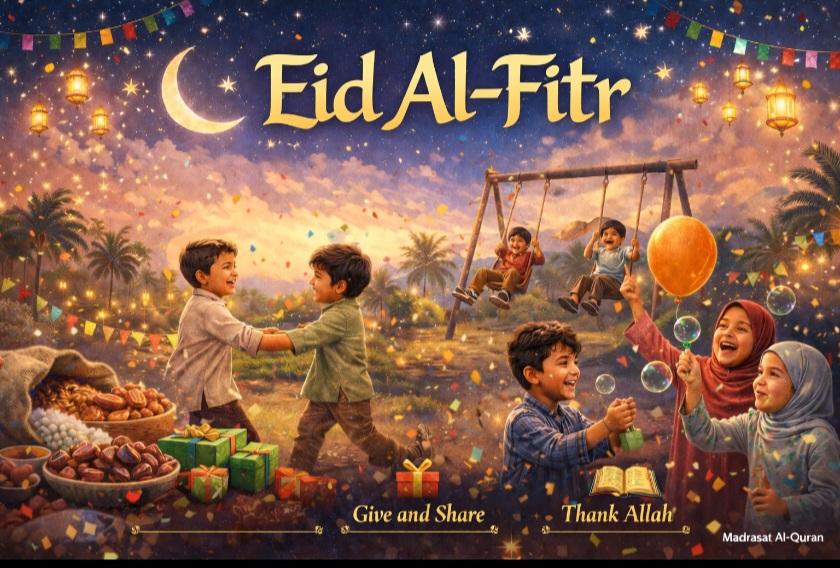
Eid is a day filled with smiles, visits, gifts, and shared meals. Children receive gifts, families reunite, and communities celebrate together.
But Islam ensures that this happiness is shared by everyone, not just those who are fortunate.
This is why Zakat Al-Fitr is given before the Eid prayer — so that those in need can also celebrate with dignity and joy.
Eid teaches a beautiful lesson:
True happiness is not only in receiving — but in giving and caring for others.
Eid: A New Beginning After Ramadan
Ramadan transforms hearts. It strengthens faith, builds discipline, and deepens a believer’s connection with the Qur’an.
However, the real success of Ramadan appears after Ramadan ends.
A believer who prayed more, read the Qur’an regularly, and improved their character during Ramadan should strive to keep these habits alive throughout the year.
Eid Al-Fitr is therefore not just the end of Ramadan — it is the beginning of a new spiritual chapter.
Keep the Qur’an in Your Life After Ramadan
During Ramadan, millions of Muslims reconnect with the Qur’an through recitation, reflection, and memorization. Yet many people struggle to maintain that connection once the month ends.
The Qur’an was not revealed for one month of the year.
It was revealed as guidance for a lifetime.
This is why structured learning and consistent guidance can make a profound difference in a Muslim’s journey with the Qur’an.
At Madrasat Al-Quran, students from around the world learn to read, recite, and memorize the Qur’an correctly with qualified teachers. Through personalized online classes, learners of all ages can build a strong and lasting relationship with the Book of Allah.
Whether you are beginning your journey with the Arabic alphabet or working toward memorizing the Qur’an, the right guidance can transform your learning experience.
Because the greatest gift after Ramadan…
is to keep the Qur’an alive in your heart every day of the year.