

A Heart That Gives
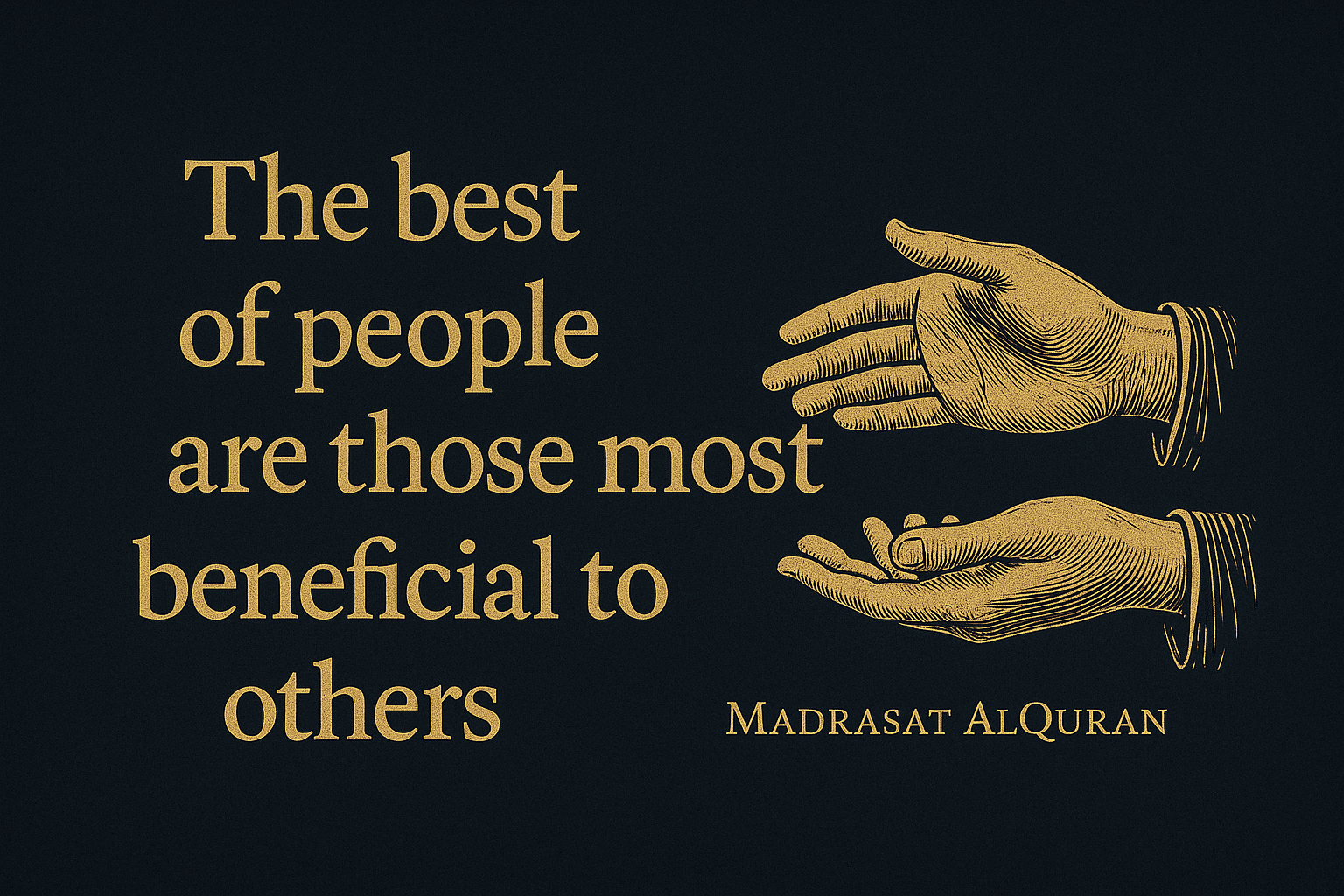
The Best of People Are Those Most Beneficial to Others
One of the greatest lessons Islam teaches us is that a person’s true worth is not measured by wealth or status, but by how much goodness they bring to others. Real life is not about living only for oneself, but about feeling the pain of others and striving to bring them happiness.
The Prophet ﷺ summarized this profound meaning in his noble saying:
> “The best of people are those most beneficial to others.”
These few words contain the philosophy of life itself: true happiness lies in giving, not taking; in generosity, not selfishness; and in serving others, not in boasting over them.
---
The Spirit of Cooperation and Brotherhood in Islam
From the very beginning of the Islamic community, the Prophet ﷺ instilled in his followers the values of cooperation, love, and mutual support — for a strong society can only stand upon helping one another in goodness.
This spirit was most beautifully demonstrated in the event of brotherhood (Mu’ākhāh) between the Muhājirīn (the emigrants from Makkah) and the Ansār (the helpers of Madinah).
When the Muhājirīn left their homes, wealth, and families in Makkah for the sake of Allah, the Ansār welcomed them with open hearts. They shared their homes, food, and wealth without hesitation. Allah described them in the Qur’an:
> “They give preference to others over themselves, even though they are in need.” (Al-Hashr 9)
Among the most touching examples was that of Sa‘d ibn ar-Rabī‘ and ‘Abdur-Rahmān ibn ‘Awf.
Sa‘d said to his new brother:
> “I am among the wealthiest of the Ansār; I will divide my wealth in half and offer you one of my two wives.”
But ‘Abdur-Rahmān replied with humility and dignity:
“May Allah bless you in your wealth and family. Just show me the way to the marketplace.”
He began working and soon became a successful merchant — yet never forgot the kindness shown to him.
---
Examples from the Companions
This spirit of generosity and service was not a momentary act — it became a way of life for the Companions of the Prophet ﷺ.
Abu Bakr As-Siddīq gave all his wealth for the sake of Allah. When the Prophet ﷺ asked, “What have you left for your family?” he replied, “I left for them Allah and His Messenger.”
‘Umar ibn al-Khattāb brought half of his wealth one day, thinking he would surpass Abu Bakr, but found that Abu Bakr had already given everything.
‘Uthmān ibn ‘Affān financed the entire army during the difficult expedition of Tabūk. The Prophet ﷺ said about him:
> “Nothing will harm ‘Uthmān after what he did today.”
‘Alī ibn Abī Tālib used to help the poor and fulfill people’s needs secretly at night. After his death, people discovered that many families had been living from his unseen charity.
They all lived for one purpose: to serve others and please Allah. Their lives were proof that true greatness lies in giving, not in having.
---
Being Beneficial in Our Time
Helping others is not limited to money. You can benefit people with your knowledge, your smile, your kind words, or your time.
Teaching a child, comforting a friend, visiting the sick, or sharing useful knowledge — all are acts of goodness that Allah loves.
In a world where selfishness often prevails, being a person who lives to help others is rare — and precious. The believer gives without expecting anything in return, knowing that Allah sees every act of kindness, and that a single sincere smile might open a door of Paradise.
---
The most beloved people to Allah are those who bring benefit to His creation. So, make your life meaningful — leave behind a legacy of goodness.
Be like the palm tree: people throw stones at it, yet it drops sweet fruit in return.
Plant seeds of kindness wherever you go, and remember — you may forget your good deed, but Allah never does.
Be among the best of people... by being the most beneficial to others.